Find a need and fulfill it. Successful businesses are founded on the needs of people. ~A. G. Gaston
I would have been fired a hundred times at a company run by MBAs. But I never went into business to make money. I went... so that I could do interesting things that hadn't been done before. ~Amar Bose
It's kind of fun to do the impossible. ~Walt Disney
It always looks impossible until it's done. ~Nelson Mandela
Software being "Done" is like lawn being "Mowed". ~Jim Benson
If you’re creating a company, it’s important to limit the number of miracles in series. Start with something that’s the most doable and then expand from there. ~Elon Musk
A person with a new idea is a crank until the idea succeeds. ~Mark Twain
Everybody told me no at first, including my wife. I turned the nos into yeses and the disadvantages into advantages. ~John H. Johnson
The best way to make dreams come true is to wake up. ~Mae C. Jemison
The very nature of science is discoveries, and the best of those discoveries are the ones you don't expect. ~Neil deGrasse Tyson
God, make me so uncomfortable that I will do the very thing I fear. ~Ruby Dee
The most difficult thing is the decision to act. The rest is merely tenacity. ~Amelia Earhart
You don't understand anything until you learn it more than one way. ~Marvin Minsky
You make your mistakes to learn how to get to the good stuff. ~Quincy Jones
RubyMotion is a Mac application that lets developers write iOS apps in Ruby. It’s possible to create the user interface for the app entirely within RubyMotion or with a Ruby gem like Teacup. But what about devs who prefer Interface Builder?
This article will show how to use Xcode’s Interface Builder to create a basic UI for a RubyMotion application.
Some organizations are innovative, while others are just lucky. How can you tell the difference? I would submit that longevity is a great divider between true innovators and those who are just lucky. An organization that generates new ideas time after time breaks the statistical rules that define luck. These are the organizations worthy of study.
This is one of my favorite quotes from TR. Pardon the bias toward the male gender. This was written in the early 1900s.
It is not the critic who counts, not the man who points out how the strong man stumbled or where the doer of deeds could have done better.
The credit belongs to the man who is actually in the arena; whose face is marred by dust and sweat and blood; who strives valiantly; who errs and comes short again and again; who knows the great enthusiasms, the great devotions, and spends himself in a worthy cause; who, at the best, knows in the end the triumph of high achievement; and who, at the worst, if he fails, at least fails while daring greatly, so that his place shall never be with those cold and timid souls who know neither victory nor defeat.
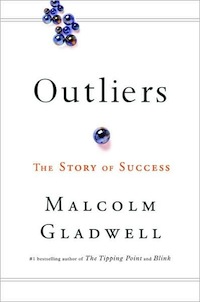
In the book Outliers, author Malcolm Gladwell observes that it takes roughly ten thousand hours of practice to achieve mastery in a field. How does Gladwell arrive at this conclusion? And, if the conclusion is true, how can we leverage this idea to achieve greatness in our professions?
Gladwell studied the lives of extremely successful people to find out how they achieved success. This article will review a few examples from Gladwell’s research, and conclude with some thoughts for moving forward.
Nine out of ten startups fail in the first year. Why? More important, what can we do to improve the odds? Entrepreneur Steve Blank might have an answer, expressed in his book The Four Steps to the Epiphany. Key points from the book are summarized in this 5-minute video.



 Some organizations are innovative, while others are just lucky. How can you tell the difference? I would submit that longevity is a great divider between true innovators and those who are just lucky. An organization that generates new ideas time after time breaks the statistical rules that define luck. These are the organizations worthy of study.